
Taxes and Wealth Creation: The Truth Most Families Never Hear
A few weeks ago our 14-year-old daughter ordered a $30 item online with her own hard-earned cash. She was proud of herself—until a notice popped up: the product was coming from overseas and a tariff of roughly $30 would be due at delivery. She looked at me, stunned. “Wait… I have to pay double to get it?” She paused, thought, and said, “I still want it.”
That tiny moment shows a big reality: taxes aren’t just something you deal with in April. They show up everywhere, often without warning, and every one of them is a leak in your wealth bucket. It’s also a simple picture of why taxes and wealth creation are tied together in ways most families never see.
Podcast: Play in new window | Download (Duration: 51:38 — 59.1MB)
Subscribe: Apple Podcasts | Spotify | Android | Pandora | Youtube Music | RSS | More
Table of Contents
The Real Link Between Taxes and Wealth Creation
This topic matters because taxes quietly take more from most families than any other expense. Not your mortgage. Not your lifestyle. Taxes.
In this article we’re going to pull taxes out of the “yearly chore” box and put them where they belong—in the center of your wealth plan. You’ll see why taxes are such a drag on compounding, how the tax code rewards certain behaviors, what the SECURE Act changed for retirement accounts and heirs, and why Roth conversions and other strategies can protect wealth for your lifetime and beyond. The goal is simple: help you keep more dollars in your control so they can grow and bless your family for generations.
Taxes and wealth creation: Why taxes are the biggest wealth leak
Most people think about taxes as a single event: file your return, see if you owe or get a refund, and move on. But Bruce made a point that changes everything: we pay taxes on almost every transaction. Federal and state income taxes are just the obvious ones. Add sales tax, gasoline taxes, property taxes, and the taxes baked into your phone and internet bill—and the true cost is enormous.
Even when you don’t see it, you pay it. And the dollars you lose to taxes don’t just disappear today. You lose what those dollars could have become after decades of compounding. Once money leaves your control, the future of that money is gone forever.
The compounding cost of taxes
I love pictures, so here’s one we used. Imagine your money as water in a five-gallon bucket. If there are leaks in the bottom, you don’t arrive anywhere with a full bucket. Taxes are one of the biggest leaks. You can earn more and work harder, but if you don’t seal the leaks, your progress is always slower than it should be.
Think about the penny-doubling example. A penny doubled daily for 30 days becomes millions, but for the first week it still feels tiny. That’s why people underestimate compounding. Taxes interrupt that curve. They pull dollars out before they ever reach the steep part of growth.
Wealth isn’t only about what you earn. It’s about what you keep and control long enough for compounding to do its job. That’s why taxes and wealth creation are inseparable.
Taxes and wealth creation: 95% of the tax code is about how not to pay taxes
Bruce shared something that shaped his whole view. A former IRS auditor once told him: only about 5% of the tax code explains how you pay taxes. The other 95% explains how you don’t have to pay taxes.
That surprised me at first, but it’s true. Congress uses the tax code to steer behavior. If they want more housing, they reward people who provide housing. If they want investment in certain industries, they create incentives there. The incentives exist on purpose. If lawmakers didn’t want people to use them, they wouldn’t be written into law.
“Is this deductible?” vs “How do I make this deductible?”
Tax strategist Tom Wheelwright says the wrong question is, “Is this deductible?” The right question is, “How do I make this deductible?”
Example: if you travel to evaluate real estate deals and your primary purpose is legitimate business, documented properly, the tax code may allow deductions. The key isn’t being clever. The key is following the rules clearly. We never recommend gray areas. Good tax strategies are black-and-white and well documented.
Taxes and wealth creation: Tax planning is not tax preparation
The tax code is thousands of pages long and changes constantly. Many CPAs are overloaded with compliance work—paperwork, deadlines, filing logistics. So a lot of families get tax preparation, not tax planning.
Preparation reports what happened and tells you what you owe. Planning helps you shape what you owe before the year ends. If you want to build wealth, you can’t treat planning like an afterthought.
You may need a professional whose mindset is: “My job is to help your family pay the least amount of tax legally possible.” Not because taxes are bad, but because every dollar saved is a dollar that can compound, be invested, or be given with purpose.
Taxes and wealth creation: The SECURE Act and a silent inheritance tax
If you have tax-deferred retirement accounts—401(k)s, IRAs, 403(b)s, SEP IRAs, deferred annuities—you need to understand what changed.
Older rules required minimum distributions (RMDs) at age 70½. The SECURE Act pushed that age to 75. That sounds like a gift, but it has a catch: more years of growth means a larger account, which often leads to larger taxable withdrawals later.
But the bigger change hits your heirs.
The 10-year inherited IRA rule
If a tax-deferred account passes to a spouse, they can keep deferring. If it passes to your kids or grandkids, most beneficiaries must empty the account within 10 years.
Picture a 45-year-old inheriting a $1 million IRA. Under old stretch rules, they could take small withdrawals over a lifetime. Now many will take around 10% per year—about $100,000 annually—stacked on top of their working income, often in their highest-earning years. That pushes those inherited dollars into their top tax bracket.
So the SECURE Act didn’t remove taxes. It concentrated them. If you do nothing, your children may pay far more tax on your retirement savings than you ever expected.
Taxes and wealth creation: Roth conversions as a legacy move
This is where Roth conversions come in. We’re not giving advice here—your personal facts matter—but the principle is powerful.
A Roth conversion means paying tax on some tax-deferred dollars now so they move into a Roth account. Later withdrawals are tax-free. When the Roth passes to heirs, they still follow the 10-year rule, but distributions are generally income-tax-free.
When we run numbers with families, we often find that paying some tax earlier can reduce the total tax bite over two lifetimes—yours and your kids’. For families who care about legacy, that’s a big deal.
Taxes and wealth creation: Positioning money where compounding can keep working
Bruce listed several straightforward ways families can keep more dollars compounding without needing complex structures.
Real estate incentives
Real estate is a clear example of Congress rewarding behavior. The U.S. needs more housing, so the tax code offers depreciation and, in some cases, bonus depreciation for certain investments. Those deductions can offset taxable income and free up cash flow for more investment. The rules are specific, so strategy and documentation matter.
Charitable giving
If generosity is already part of your family culture, don’t ignore how charitable strategies can lower taxes while letting you support what matters most.
Whole life insurance for tax-efficient legacy
This is a place where our work often connects the dots. Properly designed whole life insurance has a unique tax profile: cash value grows tax-deferred, you can access it through policy loans without triggering income tax, and the death benefit passes to heirs income-tax-free.
We like to say that every tax dollar you save is another dollar you can reposition into assets that serve generations. Whole life often becomes a family gold reserve—liquid in your lifetime, leveraged at death, and protected from future tax surprises.
Taxes and wealth creation: Thinking past your lifetime
During the episode I shared a golf analogy. Your wealth plan is like a golf swing. Most people only focus on the backswing—everything that happens until you hit the ball. In life, that’s “my lifetime.”
But legacy is the follow-through. Where does the ball go after contact? What trajectory does your wealth take after you’re gone?
When you plan only for your life, you miss the biggest multiplier in tax planning: time across generations. When you plan with follow-through, you make different choices today—like paying some taxes sooner—because you see how that can protect your children from a heavier burden later.
Here’s the point: taxes and wealth creation rise and fall together.
Taxes are not a once-a-year event. They’re a constant drag on your cash flow and your compounding. The tax code is a roadmap that rewards certain decisions and penalizes others. The SECURE Act has made tax-deferred accounts less friendly to heirs, and Roth conversions deserve a serious look for families who want long-term efficiency. And positioning money in tax-favored assets—like real estate, charitable structures, and properly designed whole life insurance—can keep more capital working for your family.
You don’t need to hate taxes to take them seriously. You just need to recognize that keeping more in your control today changes what’s possible tomorrow.
Book A Strategy Call
If this stirred something in you, don’t default to the path of least resistance. The default path is expensive. It sends more of your life’s work to taxes than you ever intended.
If you want help applying these ideas to your situation, book a call with our team. We’ll help you see your options clearly and build a plan that keeps more in your control for your family and the generations after you.
We offer two powerful ways to help you create lasting impact:
Legacy Strategy Call – If you want to uncover your family values, mission, and vision, and create a legacy that’s about more than just money, we can guide you through the process of financial stewardship and family leadership. Save time coordinating your family’s finances while building a legacy that lasts for generations. Book a Legacy Strategy Call to learn more about how we can help.
If this stirred something in you, don’t default to the path of least resistance. The default path is expensive. It sends more of your life’s work to taxes than you ever intended.
Financial Strategy Call – Discover how Privatized Banking, alternative investments, tax-mitigation, and cash flow strategies can accelerate your time and money freedom while improving your life today. Let us show you how to align your financial resources for maximum growth and efficiency. Book a Strategy Call with our team today.
FAQ
What is the connection between taxes and wealth creation?
Taxes reduce both what you have today and what your money could become through compounding. Every dollar paid in tax is a dollar that can’t grow for you or your heirs. Seeing taxes as a continual wealth leak, not a yearly event, helps families plan proactively and keep more capital working long term.
Why do taxes feel invisible to most families?
Many taxes are embedded in everyday life—sales tax, gas tax, property taxes, and taxes inside bills and prices. Because they’re spread across transactions, families underestimate their total cost. This invisibility makes taxes easy to ignore, even though they often become the largest lifetime expense.
What did the SECURE Act change for inherited retirement accounts?
For most non-spouse heirs, tax-deferred retirement accounts must be emptied within 10 years. That forces larger annual withdrawals, often during heirs’ peak earning years, pushing distributions into higher tax brackets. The result is a bigger tax hit for the next generation than old stretch-IRA rules allowed.
Are Roth conversions a good strategy for generational wealth?
They can be. A Roth conversion pays tax now to move funds into a Roth account, allowing future withdrawals to be tax-free. Heirs still follow the 10-year rule, but distributions are usually income-tax-free. Whether it fits depends on your tax bracket, timeline, and legacy goals.
How does real estate help with tax-efficient wealth building?
Real estate can offer depreciation and other deductions that Congress designed to encourage housing investment. Those deductions can offset taxable income and free up cash flow for more investing. The rules are specific, so strategy and documentation matter, but the tax code clearly favors certain real estate activities.
Why is tax planning different from tax preparation?
Tax preparation reports last year’s numbers and calculates what you owe. Tax planning shapes decisions before year-end to reduce what you owe legally. Families focused on wealth creation need planning—otherwise they’re stuck with whatever tax outcome the default system produces.
How does whole life insurance fit into tax-efficient legacy planning?
When designed correctly, whole life cash value grows tax-deferred and can be accessed through policy loans without income tax. The death benefit passes to heirs income-tax-free. That combination can support compounding during your life and transfer leveraged, tax-efficient value to the next generation.

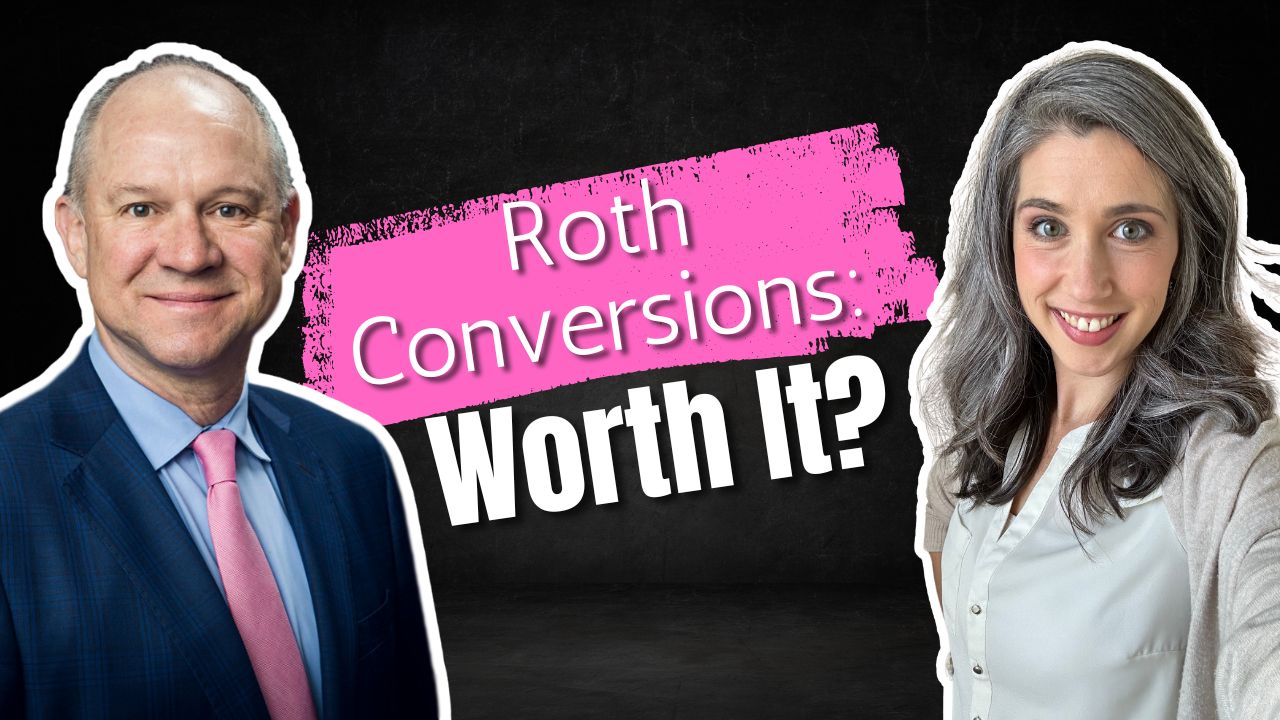
Roth Conversion Strategy: When It Makes Sense, What to Watch For, and How It Affects Your Heirs
“I’m Not Paying for Oil—I’m Protecting the Engine” There’s a moment in our house where Lucas will look at me—calm as can be—and say, “Rachel… I’m not paying for oil. I’m protecting the engine.” And every time he says it, it reminds me of how people think about taxes. Because an oil change feels annoying.…

Will AI Replace Financial Advisors? Why Wisdom Still Wins in Real Life Money Decisions
The Moment “Confident” Sounds Like “Certain” A few weeks ago, we found ourselves talking about how quickly AI is moving. It’s not just that it can answer questions fast—it’s that it can sound certain while doing it. And when you’re staring at a big money decision—debt, investing, taxes, retirement—certainty feels like relief. It feels like…